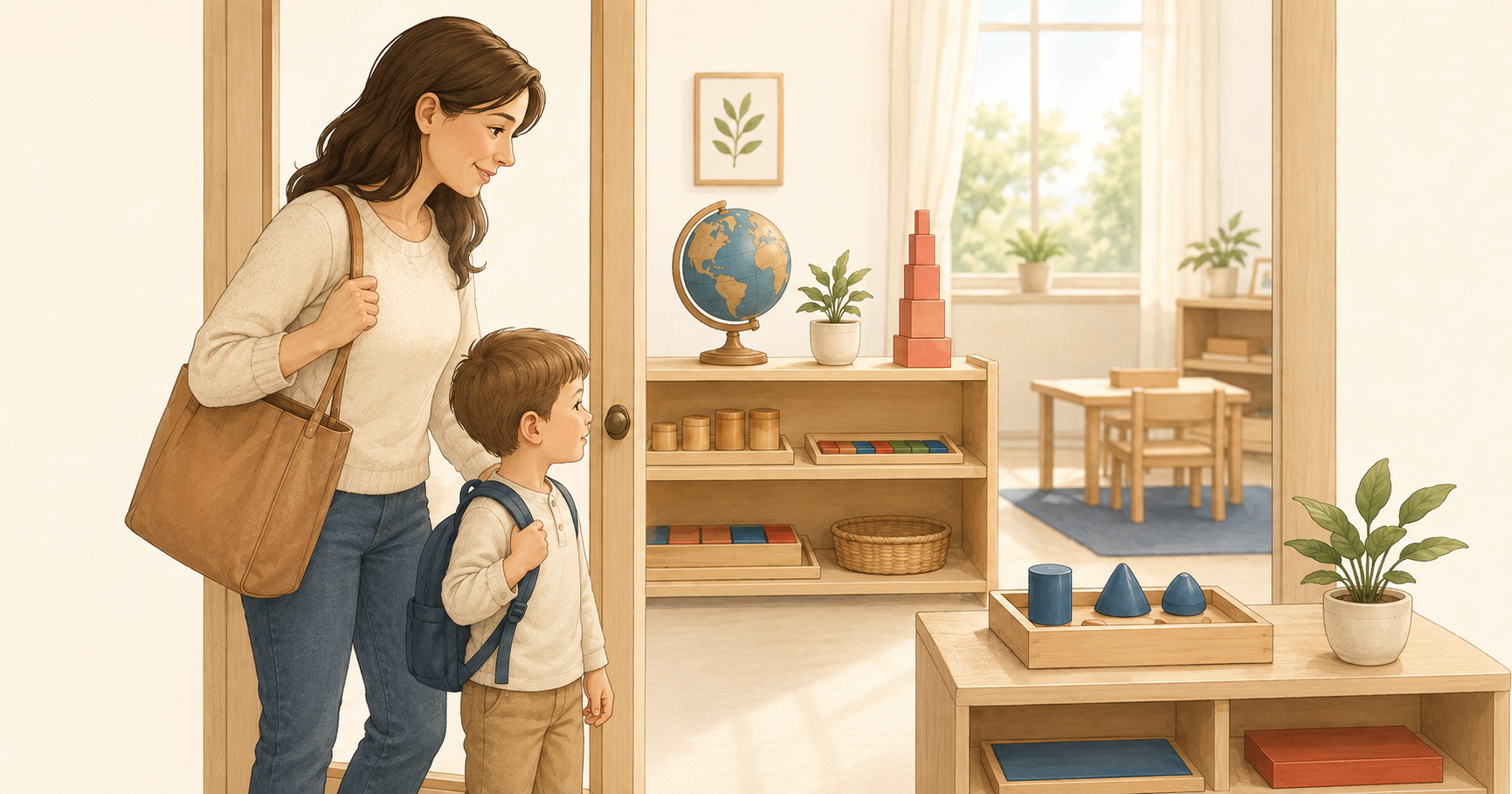
The word "Montessori" is not trademarked, which means any school can use it — and the quality behind the name varies widely. If you are touring schools in Orange County, here is how to tell an authentic Montessori environment from one that just borrowed the label.
Watch the room, not the brochure
The best signal is the classroom itself during a work period. Look for calm, purposeful activity: children choosing their own work, concentrating for long stretches, and moving freely without chaos. A genuinely prepared environment feels ordered and unhurried, with real Montessori materials arranged on low, reachable shelves — not a wall of plastic toys.
Look at the materials
Authentic Montessori materials are hands-on, self-correcting, and beautiful. You should see children working with concrete materials — beads for counting, sandpaper letters, sensorial towers — rather than worksheets and screens.
Notice the teachers
A Montessori guide tends to move quietly, crouch to a child's level, and observe more than they direct. Ask about the teachers' Montessori training and how long they have been with the school — low turnover is a good sign of a healthy community.
Good questions to ask
- How long is the uninterrupted work period each morning?
- How are the classrooms grouped by age?
- What does a typical day look like for my child's age?
- How do you communicate with families about how my child is doing?
Trust how it feels
You know your child. Beyond the materials and the credentials, notice whether the environment feels warm, respectful, and calm — the kind of place where you can picture your child settling in and thriving.
At Little Scholars, tours run on weekday mornings and take about 20 to 30 minutes, so you can see a real work period in progress. Schedule your visit, or learn more about how enrollment works.